

BOOKZONE
Feature Engineering for Machine Learning
Author : Alice Zheng
Binding:Paperback
Publication Date
Publisher :
SKU:9789352137114
Share
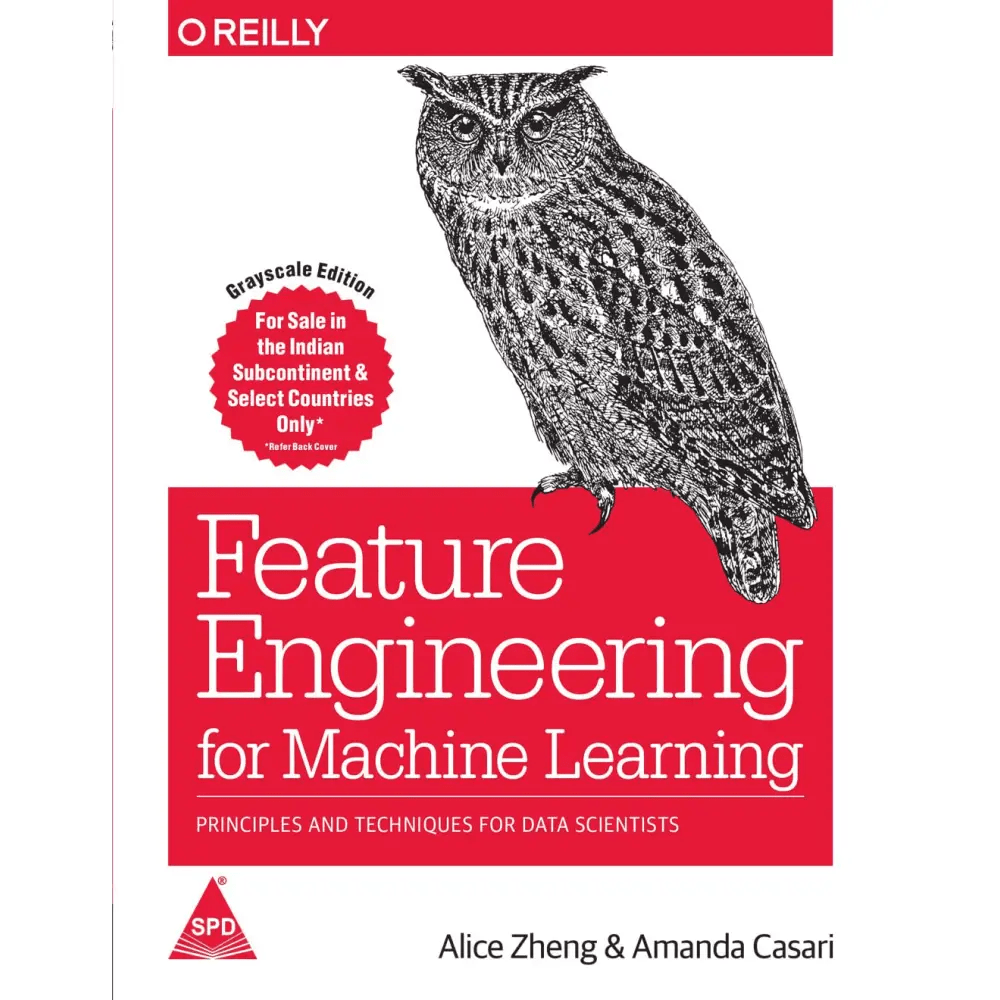
Feature engineering is a crucial step in the machine-learning pipeline, yet this topic is rarely examined on its own. With this practical book, you'll learn techniques for extracting and transforming features-the numeric representations of raw data-into formats for machine-learning models. Each chapter guides you through a single data problem, such as how to represent text or image data. Together, these examples illustrate the main principles of feature engineering.'box-sizing: border-box; padding: 0px; margin-top: 0em; margin-bottom: 1em; margin-left: 1em; font-family: "Amazon Ember", Arial, sans-serif; font-size: small; background-color: rgb(255, 255, 255);'Rather than simply teach these principles, authors Alice Zheng and Amanda Casari focus on practical application with exercises throughout the book. The closing chapter brings everything together tackling a real-world, structured dataset with several feature-engineering techniques. Python packages including numpy, Pandas, Scikit-learn, and Matplotlib are used in code examples.'box-sizing: border-box; padding: 0px; margin-top: 0em; margin-bottom: 1em; margin-left: 1em; font-family: "Amazon Ember", Arial, sans-serif; font-size: small; background-color: rgb(255, 255, 255);'You'll examine:
Feature engineering for numeric data: filtering, binning, scaling, log transforms, and power transforms
Natural text techniques: bag-of-words, n-grams, and phrase detection
Frequency-based filtering and feature scaling for eliminating uninformative features
Encoding techniques of categorical variables, including feature hashing and bin-counting
Model-based feature engineering with principal component analysis
The concept of model stacking, using k-means as a featurization technique
Image feature extraction with manual and deep-learning techniques